Tell readers a little about yourself.
I’m Obinna D. Ugoeke, a Nigerian writer drawn to human nature, relationships, society and the hidden forces that shape our choices. I’m interested in the things people overlook, the assumptions they rarely question, and the truths that become visible only when we look at familiar situations differently.
Where do you write, and what does that space look like?
My writing grows out of a long-standing habit of observing people, questioning familiar ideas and reflecting on everyday experiences. I’m drawn to the moment when an ordinary situation reveals something unexpected about human nature. That curiosity continues to give me reasons to write.
What does success look like to you?
Success means reaching readers who find something meaningful in my work, especially a perspective that changes how they understand a familiar situation. I also want my writing to build a sustainable professional future, allowing me to keep creating, publishing and reaching readers beyond my immediate environment.
How would you describe your latest book to someone who's never heard of it?
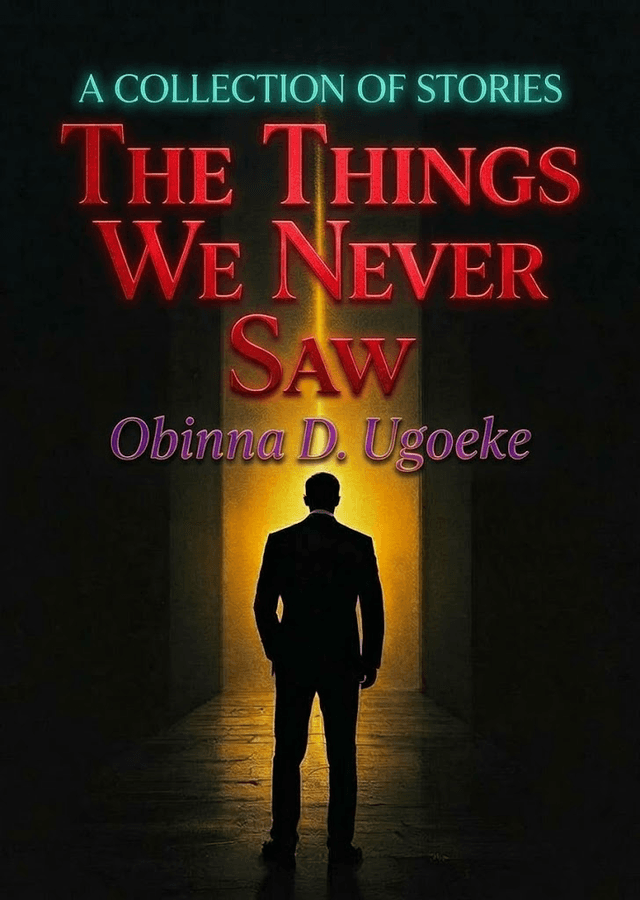
*The Things We Never Saw* is a collection of ten reflective stories about human nature, relationships, society, and the truths we often fail to recognise until their consequences become impossible to ignore. Each story looks beneath familiar situations to uncover hidden motives, uncomfortable assumptions, and the choices that shape our lives. The collection invites readers to look again at what they think they understand—and perhaps discover something they had never seen before.
Did this story start with an image, a voice, an idea, or a problem?
It began with an idea: that the most important truths in our lives are often hidden in ordinary situations, familiar relationships, and the assumptions we rarely question. I wanted to explore what happens when people fail to see what is right before them—and how those overlooked truths can shape their choices, relationships, and destinies. Each story grew from that central curiosity about human nature and the things we understand only when we look beyond the obvious.
Have you hidden any secrets in your books that only a few readers will spot?
Yes, though not always in the form of obvious clues or hidden messages. Some of the secrets lie in the details, the characters’ choices, the things left unsaid, and the contradictions between what people believe about themselves and what their actions reveal. A careful reader may discover that a seemingly minor detail carries a deeper meaning, or that a story’s real subject is different from what it first appears to be. I enjoy leaving room for readers to discover meanings beyond the surface, even ones I may not have consciously anticipated when writing.
Do you plan everything in advance, or discover the story as you go?
I usually begin with an observation, a question or a contradiction rather than a rigid blueprint. I need a sense of direction, but I also want room for discovery. Sometimes the most revealing part of a story emerges when I follow an idea beyond my original assumptions.
What do you do when you're stuck?
When I get stuck, I return to the central question and examine the assumptions I may have accepted too quickly. I ask whether I have overlooked another motive, perspective or consequence. Sometimes the way forward is not to add more words but to reconsider the idea beneath them.
How much research goes into your books?
The amount of research depends on the story. My writing is driven more by observing human behaviour, questioning familiar assumptions, and examining the social and emotional forces behind people’s choices than by extensive factual world-building. When a story involves claims, unfamiliar subjects, or real-world details that matter to its credibility, research and cross-checking become important. Ultimately, I want every story to feel believable—not merely because its details are accurate, but because its portrayal of human nature rings true.
Describe your writing in three words.
Observant. Challenging. Thought-provoking
How does releasing a story chapter by chapter change how you write it?
Releasing a story chapter by chapter encourages me to think carefully about pacing, anticipation, and what each instalment leaves the reader thinking or feeling. Every chapter must offer something meaningful while creating enough curiosity to make the next one worth reading. It also changes the relationship between the writer and the audience: the story unfolds publicly, giving readers opportunities to reflect and respond as it develops. For me, however, the larger story must still hold together as a complete work, with every part contributing to its deeper meaning.
Why did you choose to publish the way you do?
I chose this approach because I want my stories to reach readers beyond my immediate environment without waiting for traditional publishing opportunities. Digital publishing gives me a direct way to share my work, build a readership, and learn how people respond to the ideas I explore. It also allows me to experiment with different stories and formats while retaining a clear sense of authorship. Ultimately, publishing is not just about making my work available; it is about creating a meaningful connection between the stories I tell and the people who read them.
Where does AI fit in your process, and where doesn't it?
AI can assist me with developing ideas, exploring alternative perspectives, refining language, and examining how a story communicates its message. However, the responsibility for the work must remain with me. I decide what a story should explore, which ideas deserve to survive, what feels emotionally honest, and what the reader should be left to consider. AI can be a useful creative instrument, but it cannot replace my judgment, my observations of human nature, or my responsibility for what I publish. My goal is to keep strengthening my own voice and creative independence while using tools deliberately rather than allowing them to dictate the work.
Which authors shaped the way you write?
My approach has been shaped by a broad interest in ideas, human behaviour and the power of storytelling to challenge familiar assumptions. I am especially drawn to writing that reveals something beneath the obvious and leaves readers reconsidering what they thought they understood. Observation and reflection remain important influences on my own voice.
What does "being the author" mean to you when you write with AI?
Being the author means taking responsibility for the work beyond simply producing its words. It means owning the central idea, making the creative decisions, questioning what the work says, judging what belongs and what does not, and standing behind the finished piece. When I use AI, I see it as a tool that can help explore possibilities, but the tool must not become the authority over the story. Authorship, to me, is ultimately about creative judgment, intention, and accountability—not merely who or what helped arrange the sentences.