
中国历史小说
OngoingSynopsis of The Public Instrument (《公器》)
In 265 CE, Sima Yan overthrew Wei and founded Jin, enfeoffing twenty-seven princes of the imperial clan, granting them troops and sending them to their domains while the provinces were stripped of their armies. The Simas treated the realm as family property, and the seed of the public instrument turned to private use was planted. Wei Guan remonstrated and was ignored; Shan Tao remonstrated, then burned his memorial. The center hollowed out, the princes kept their armies, an imbecile was made crown prince, and marriage ties bound the throne to the Yang and Jia clans. Beneath the prosperity of the Taikang era, the private vessel was steadily displacing the public one. Li Mi submitted his Memorial of Personal Feelings, Wen Chang planted jujube trees, Chen Shi inherited a soldier's household registration, Le Hu was seized and sold into bondage. The original sin of carving up the land had taken root beneath a peaceful surface.
Sima Yan died in 290. Yang Jun became regent, and Empress Jia seized the court. In 291 she had Yang Jun killed; Sima Wei, Prince of Chu, killed Sima Liang, Prince of Runan, and Wei Guan, and the empress then killed Sima Wei in turn. Forged edicts, murders, depositions and enthronements by private whim became routine; the palace guard could be commandeered, the princes summoned, and the crown prince Sima Yu was deposed and killed. In 300 Sima Lun, Prince of Zhao, deposed and killed Empress Jia, and in 301 he usurped the throne, provoking three princes to rise in arms. The Princes of Qi, Changsha, Chengdu, Hejian and Donghai took turns holding power and attacking one another, building ramparts from their own kin and staining the Yellow River and Luo with blood. The princes summoned Hu troops to fight for them and seized and sold Hu people into slavery; Liu Yuan declared himself King of Han, then emperor, Shi Le defeated the Jin army at Ningping, and Liu Yao, Wang Mi and Shi Le took Luoyang, capturing Emperor Huai and burning the city. In 316 Emperor Min surrendered, and Western Jin fell. The scholar-gentry fled south and the literary tradition survived, but the public instrument remained private, merely relocated to Jiankang.
In the north the Hu peoples rose: Shi Le proclaimed himself emperor, Murong's Yan was founded, and Former Qin unified the region. At the Battle of the Fei River in 383, Former Qin collapsed and the north split once more. In the south the great clans never ceased their struggles: Zu Ti's northern campaigns, Wang Dun's rebellion and Su Jun's rebellion followed one upon another; Sun En rose in revolt, Huan Xuan usurped the throne, and Liu Yu restored Jin and took power, campaigning north to destroy Southern Yan, Qiaoshu and Later Qin. In 420 Liu Yu replaced Jin with his own dynasty, deposed Emperor Gong, and hunted down the collateral branches of the Sima line until the imperial clan was all but extinguished and its bloodline withered away.
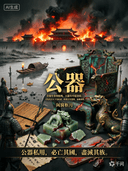
The book takes the rise and fall of the Simas as its main thread. Its imagery threads through all seven parts: Li Mi's surviving draft of the Memorial of Personal Feelings, Wen Chang's family letters and jujube tree, Chen Shi's military tag, the whip scars on Le Hu. Sima Yan treated the realm as private property, parceling out land and troops to his princes; the Eight Princes, in the name of legitimacy, pursued only spoils, and sixteen years of fratricide reduced the public instrument entirely to a private one. The Central Plains lay hollow, and the Hu peoples went from bystanders to harvesters. A dynasty founded on private interest ended with its clan elite all but gone, its ruling house destroyed and its bloodline withered.
Turn the public instrument to private use, and the state will perish and the clan be wiped out. The historian's pen is iron; the Way of Heaven closes the circle.
Book 2
公器 ——八王骨肉相殘,中原百年塗炭The Public Instrument — Eight Princes, One Bloodline Devoured; a Century of Ruin on the Central Plain
In 265 CE, Sima Yan supplanted Wei and founded Jin, enfeoffing twenty-seven princes of the imperial clan, granting them troops and sending them to their domains while the provinces and commanderies were stripped of their armies. The Sima family treated the realm as its private inheritance, and the root of a public trust turned to private use was planted. Wei Guan remonstrated and was ignored; Shan Tao remonstrated and burned his own memorial. With the center hollowed out and the princes holding armies, with an imbecile crown prince installed and marriage alliances forged with the Yang and Jia clans, the Taikang era's prosperity concealed a quiet truth: the private vessel was already displacing the public one. Li Mi submitted his Memorial of Personal Feelings, Wen Chang planted jujube trees, Chen Shi inherited his place in the military registers, Le Hu was seized and sold into slavery. The original sin of carving up the realm had taken root beneath the appearance of peace.
In 290 Sima Yan died; Yang Jun became regent and Empress Jia seized the reins of government. In 291 the Empress killed Yang Jun, Prince Wei of Chu killed Prince Liang of Runan and Wei Guan, and the Empress then killed Prince Wei as well. Murder by forged edict, and the deposing and enthroning of rulers for private ends, became routine; the imperial guard could be commandeered, princes could be summoned, and Crown Prince Sima Yu was deposed and killed. In 300 Prince Lun of Zhao deposed and killed the Empress, usurped the throne in 301, and three princes rose against him. Prince Jiong of Qi, Prince Yi of Changsha, Prince Ying of Chengdu, Prince Yong of Hejian, and Prince Yue of Donghai took turns seizing power and attacking one another, kin turned into ramparts, and blood stained the Yellow and Luo rivers. The princes summoned barbarian troops to fight for them and seized and sold the Hu peoples as slaves; Liu Yuan proclaimed himself King of Han, then emperor, Shi Le crushed the Jin army at Ningping, and Liu Yao, Wang Mi, and Shi Le took Luoyang, captured Emperor Huai, and burned the capital. In 316 Emperor Min surrendered and Western Jin fell. The gentry fled south and the lineage of learning survived, but the public instrument remained private, merely relocated to Jiankang.
In the north the Hu peoples rose: Shi Le took the imperial title, Murong's Yan was founded, and Former Qin unified the land. At the Battle of the Fei River in 383, Former Qin collapsed and the north split once more. In the south the great clans quarreled without end, as Zu Ti's northern expedition, Wang Dun's rebellion, and Su Jun's rebellion followed one upon another; Sun En rose in arms, Huan Xuan usurped the throne, and Liu Yu restored Jin and took power, destroying Southern Yan, Qiaoshu, and Later Qin in his northern campaigns. In 420 Liu Yu replaced Jin, deposed Emperor Gong, and hunted down the collateral Sima lines until the imperial clan was all but extinguished and its bloodline withered away.
Across seven parts, the book takes the rise and fall of the Sima family as its main thread, joined by a strand of images: Li Mi's draft of the Memorial of Personal Feelings, Wen Chang's family letters and jujube tree, Chen Shi's army tally, the scars of Le Hu's whip. Sima Yan treated the realm as private property and parceled out land and troops to his princes; the Eight Princes pursued plunder in the name of legitimacy, and sixteen years of kin slaughtering kin reduced the public instrument wholly to a private tool. The Central Plain stood empty, and the Hu peoples went from onlookers to reapers. A dynasty founded on private interest ended with its clan elite all but destroyed, its imperial political circle annihilated, its bloodline withered.
Use the public instrument for private ends, and the state will perish and the clan be wiped out. The historian's pen is iron; the Way of Heaven closes its circle.