
What Is the Mood in a Story? A Writer's Guide
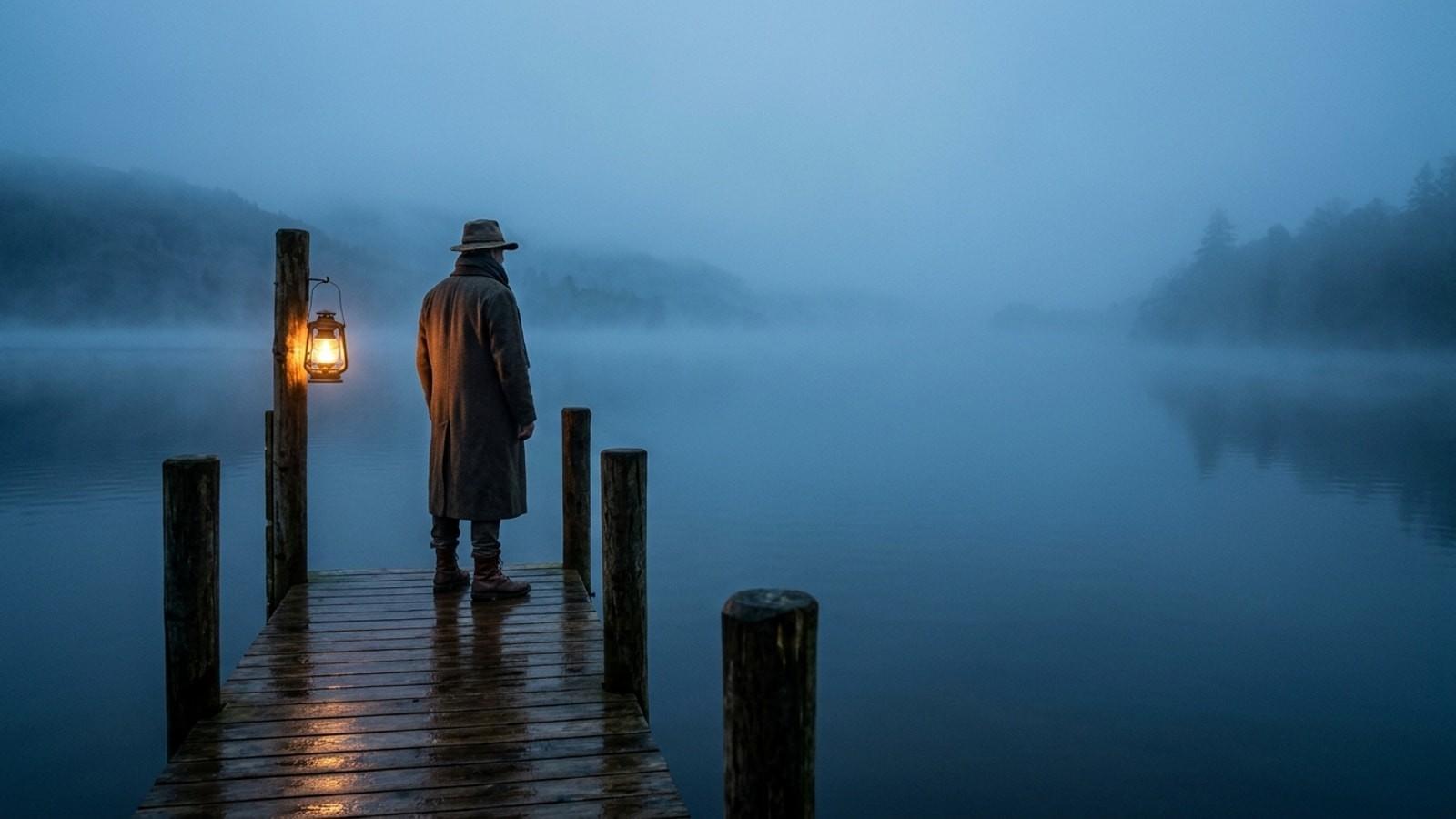
What is the mood in a story? The feeling a scene leaves in the reader, how it differs from tone, and how to build and shift it across a novel.
What is the mood in a story? It is the feeling a piece of writing creates in the reader: the atmosphere you sense as you read, whether that is dread, warmth, unease or calm. Mood belongs to the reader's experience, while tone belongs to the author's or narrator's attitude. If you want to write mood on purpose, think of it as the feeling you want the reader to carry out of each scene.
- Mood is the emotional atmosphere the reader feels; tone is the narrator's attitude toward the subject.
- Setting, word choice, sensory detail, pacing and figurative language are the main tools that build it.
- The reader's feeling and the character's feeling can differ, and that gap is where dread and tenderness often come from.
- A novel has an overall mood and a shifting mood scene by scene, and good books manage both.
- "Four types of mood" usually means something from psychology or grammar, not literature.
What is the mood in a story?
Mood is atmosphere you can feel. Open a page and, within a paragraph or two, you know whether the room is safe. A kettle whistling over a warm kitchen and a kettle whistling in a house where someone has just left for good are the same object. The mood is what separates them.
Writers and teachers often use the word "vibe" for it, and that's fair, but it helps to be a little more exact. Mood is the sum of what the reader senses from the setting, the images, the rhythm of the sentences and what is withheld. It is produced on the page and felt in the person holding the book.
Mood vs. tone: the difference in one line
These two get swapped constantly, so here is a rule of thumb you can keep.
Tone is the author's or narrator's attitude. Mood is the reader's feeling.
A narrator can describe a funeral in a dry, amused tone, and the reader can still feel grief, or a strange giddy discomfort. A narrator can describe a sunny picnic in a clipped, watchful tone, and the reader feels something is about to go wrong. Tone is how the story speaks. Mood is what that speaking does to you.
They influence each other, and in practice they often point the same way. But when you're revising, it helps to ask them as separate questions: how does this narrator feel about what is happening? and how do I want the reader to feel while it happens?
Can you give me an example of a mood?
Mood words are adjectives for the feeling, and a few families cover most of what you'll write:
- Tense or ominous: the quiet before something breaks, a door that was closed and is now open.
- Melancholic or nostalgic: a faded party, a house full of the past, a voice looking back.
- Serene or cozy: low light, slow time, nothing at stake for the next ten minutes.
- Whimsical or playful: logic bending gently, a world that delights in its own oddness.
- Claustrophobic or eerie: small spaces, wrong details, a sense of being watched.
Classic examples make the point. Poe's short stories close the walls in on you through narrow rooms and a narrator you slowly stop trusting. Alice's Adventures in Wonderland runs on playful, slightly off-kilter wonder. The Great Gatsby leaves a wistful, glittering ache. A modern thriller like Verity builds an eerie, held-breath unease. None of them announce the feeling. They arrange the page until the feeling arrives.
How might figurative language create mood?
Figurative language works because it makes the reader see a feeling instead of being told one. Compare three ways to write the same evening:
Plain: "It was a quiet street at night."
Simile: "The street lay quiet as a held breath."
Personification: "The streetlamps leaned in, listening."
The first states a fact. The second gives you tension. The third gives you a watching, slightly conspiratorial atmosphere. The facts haven't changed, only the picture has.
A few habits make this work:
- Choose comparisons that carry the emotion you want. A "held breath" is anxious; a "folded blanket" is safe. The image does the emotional work.
- Let personification set the world's attitude. A house that "sulked" and a house that "waited" are different places to walk into.
- Use hyperbole sparingly and deliberately. Overstatement can be comic, or it can tip into panic, depending on what surrounds it.
- Keep it to the senses. Cold, smell, sound and texture land faster than abstract words like "scary."
The other levers sit next to figurative language. Diction matters: "crept" and "strolled" cross the same floor differently. Sentence length matters: short sentences tighten, long ones can drift or smother. And what you leave out matters as much as what you put in.
What is the mood of the short story you're reading?
If you're analyzing a story for class, work backward from your own reaction. Pause on a scene and ask what you felt, then find the lines that did it. Look at the setting, the weather, the verbs, the length of the sentences and anything that feels slightly wrong or slightly too perfect. Then name the mood with a specific adjective rather than "good" or "scary." "Foreboding" or "wistful" will serve you better than "sad."
Two things trip people up. First, a story rarely has one mood. A piece can open cozy and curdle, or begin ominous and warm. Second, the reader can know more than the character, and then the mood comes from that gap. When a character hums happily while the reader has already seen the locked door behind them, the humming makes the scene darker. That's dramatic irony, and it is one of the strongest mood engines you have.
The four types of mood (and why the search is confusing)
People often search for "the four types of mood" and land somewhere unexpected, because the phrase belongs to other fields:
- In psychology, it can mean mood episodes, such as mania, hypomania, depression and mixed states.
- In grammar, "mood" describes the form of a sentence or verb: declarative, interrogative, imperative and exclamative.
Literary mood has no official set of four. It is open-ended, which is why writers keep word lists instead of a fixed taxonomy. If a worksheet asks for four types, it is usually asking you to sort feelings into families, like tense, sad, joyful and calm, and those are a teaching convenience rather than a rule.
Building mood across a whole novel
Most guides stop at "how to spot mood in a paragraph." If you're writing a novel, the harder skill is managing it over hundreds of pages.
Think in two layers. The macro mood is the overall atmosphere a reader associates with the book: brooding, warm, restless. The micro mood is the feeling of this scene, which can move against the macro mood. A cozy fantasy can have a frightening chapter, and the fright reads as fright because the baseline is gentle.
A few practical ways to keep control:
- Decide the mood you want per scene, then write toward it. One line in your plan, such as "dread, but the character is cheerful," keeps the gap intentional.
- Plan transitions. Moving from calm to menace works best with a few small wrong details first, not a sudden swerve.
- Vary the rhythm. A book that stays at one pitch for ten chapters numbs the reader. Release and return.
- Watch for drift in revision. A mood you built carefully in chapter two is easy to flatten in chapter twelve.
If you plan in scenes, Novelmint's timeline lets you lay out a book as chapters of beats and add a note to any beat about how it should be written, such as what a character hides or the mood to strike, and readers only ever see the prose it shapes. You can also give each beat a scene style that shapes its tone, sentence rhythm and length within your series voice, so a chapter can move from steady description into controlled tension and back. The story dials on /start, such as tone, pace and darkness, set the overall shape that guides how every chapter is written. If you're newer to planning in scenes, the guide on what a story beat is is a good place to start, and Revise and polish covers fixing the one scene whose atmosphere missed.
If you work in Claude, ChatGPT or another AI app, Novelmint connects to them over MCP, so you can plan and edit the same book from inside that app. The details are at /mcp.
FAQ
What is the mood in a story, in the simplest terms?
It's the feeling the story creates in the reader, such as tense, hopeful, gloomy or calm. It comes from setting, word choice, imagery, pacing and what the story chooses to show or hide.
How is mood different from tone?
Tone is the narrator's or author's attitude toward the subject. Mood is what the reader feels. They can match or clash, and the clash is often where interesting effects come from.
Can you give me an example of a mood?
"Ominous" is a common one: a quiet house, a half-open door, a clock that ticks too loudly. Others include nostalgic, whimsical, serene and claustrophobic. Pick the adjective that names the feeling most precisely.
How might figurative language create mood?
Similes, metaphors and personification turn a feeling into an image the reader can sense. "The street lay quiet as a held breath" produces tension where "the street was quiet" produces only a fact.
What are the four types of mood?
There is no fixed set in literature. The phrase usually points to psychology (mania, hypomania, depression, mixed episodes) or grammar (declarative, interrogative, imperative, exclamative). In fiction, mood is open-ended, and writers describe it with adjectives suited to the scene.
Can a story have more than one mood?
Yes. Most do. A novel has an overall mood and a shifting scene-by-scene mood, and contrast between the two is a useful tool.
If you want to plan the mood of your own book scene by scene, you can start writing a book and set your story's shape from the first page.