
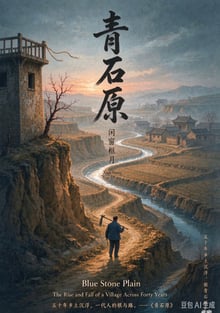
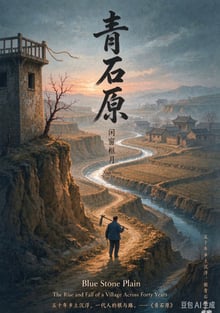
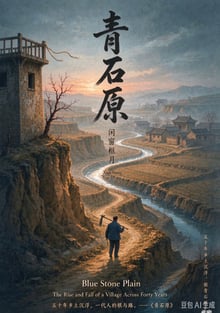
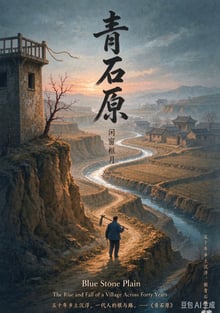
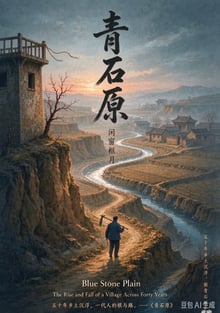
《青石原》第二卷 祠堂泣血·乱世守根The Blue Stone Plain, Volume Two: Ancestral Hall in Tears, Roots Guarded in Chaos
Historical
Written by
闲窗框月Blue Stone Plain: An Introduction
Tags: `Realism`, `Rural Epic`, `Changing Eras`, `Ensemble Cast`, `Family Saga`, `Village Life`, `Tides of History`, `Humanistic Literature`.
A half-century family epic set in a village in northern mainland China, tracing how land, clan, survival, and fate rose and fell across several generations swept along by the tides of the age. An ensemble work of literary realism — no cheat codes, no time travel, no rebirth.
This is a traditional novel written in the style of web-fiction page-turners.
The fifty years after the founding of the People's Republic saw the most fundamental transformation in China's land system in more than two thousand years.
On the old course of the Yellow River stands a village called Qingshiyuan, which rose, fell, and carried on through fifty years of historical tides.
In 1952, thirty-year-old Zhao Dehou climbed the blockhouse and watched the stream flow uselessly past the village. He resolved to dig a canal. The whole village, young and old, spent three years excavating two channels, one shovelful at a time. When the water came through, the land came alive, and so did the people.
For the next fifty years — production teams, the Great Leap Forward, famine, the Cultural Revolution, the household responsibility system, the wave of migrant labor — the tides of history surged in again and again, and Qingshiyuan rose and fell with them. The ancestral hall's doors were smashed open and shut again; the blockhouse's lamp lit up and went dark; the young left and came back.
Qingshiyuan has a dozen or so principal characters, each following a life of their own.
Fifty years on, the canal still runs, the fields are still planted, and the grass before the ancestral hall has grown tall and been cleared, been cleared and grown tall again. The hemp rope atop the blockhouse, pata, pata, has been flapping in the wind all its life.
This is not a story about heroes. It is a story about the land.

